Author: clevelandnp

  • Proposed Legislation Would Limit Property Tax Increases

    Proposed Legislation Would Limit Property Tax Increases

    As seniors and others struggle with ballooning property taxes, can solutions like the proposed ‘residential stability zones’ in Ohio help?

    Ohio House Bill 598 and Ohio Senate Bill 42 would allow local governments to offer relief through residential stability zones, areas where limited-income homeowners ages 60 and over could get property tax breaks. Under the legislation, local governments could set geographic boundaries for the zones, eligibility rules for participants and parameters for property tax reductions.

    Ed Stockhausen, senior vice president of advocacy and external relations for the nonprofit Cleveland Neighborhood Progress, has been working to pass the legislation for several years.

    “These are people who have been the foundation of our community, and as they’re entering their golden years and as the neighborhoods improve around them, they shouldn’t be displaced,” says Stockhausen. Read more from Columbus Monthly.

  • Cleveland Neighborhood Progress funding is vital to success of local CDCs

    Cleveland Neighborhood Progress funding is vital to success of local CDCs

    Ask 10 people what role a community development corporation (CDC) plays in their district, and you’re likely to get 10 different answers. A $1.66 million investment from Cleveland Neighborhood Progress—the funding intermediary for the city’s neighborhood-based development groups—should bring more transparency and understanding to this work, says Jason Powers, senior vice president of CDC advancement with Cleveland Neighborhood Progress (CNP).

    “The grant awards are responsive to the diverse programs and operations of each CDC,” explains Powers. “They support the work of community development, which shares core functions across the city while also being tailored to each neighborhood’s specific needs. Flexible funding allows CDCs to remain focused on those core functions and deliver better outcomes for their distinct neighborhoods.” Read more from FreshWater.

  • Illuminate CLE expands with new light display at Shaker Square

    Illuminate CLE expands with new light display at Shaker Square

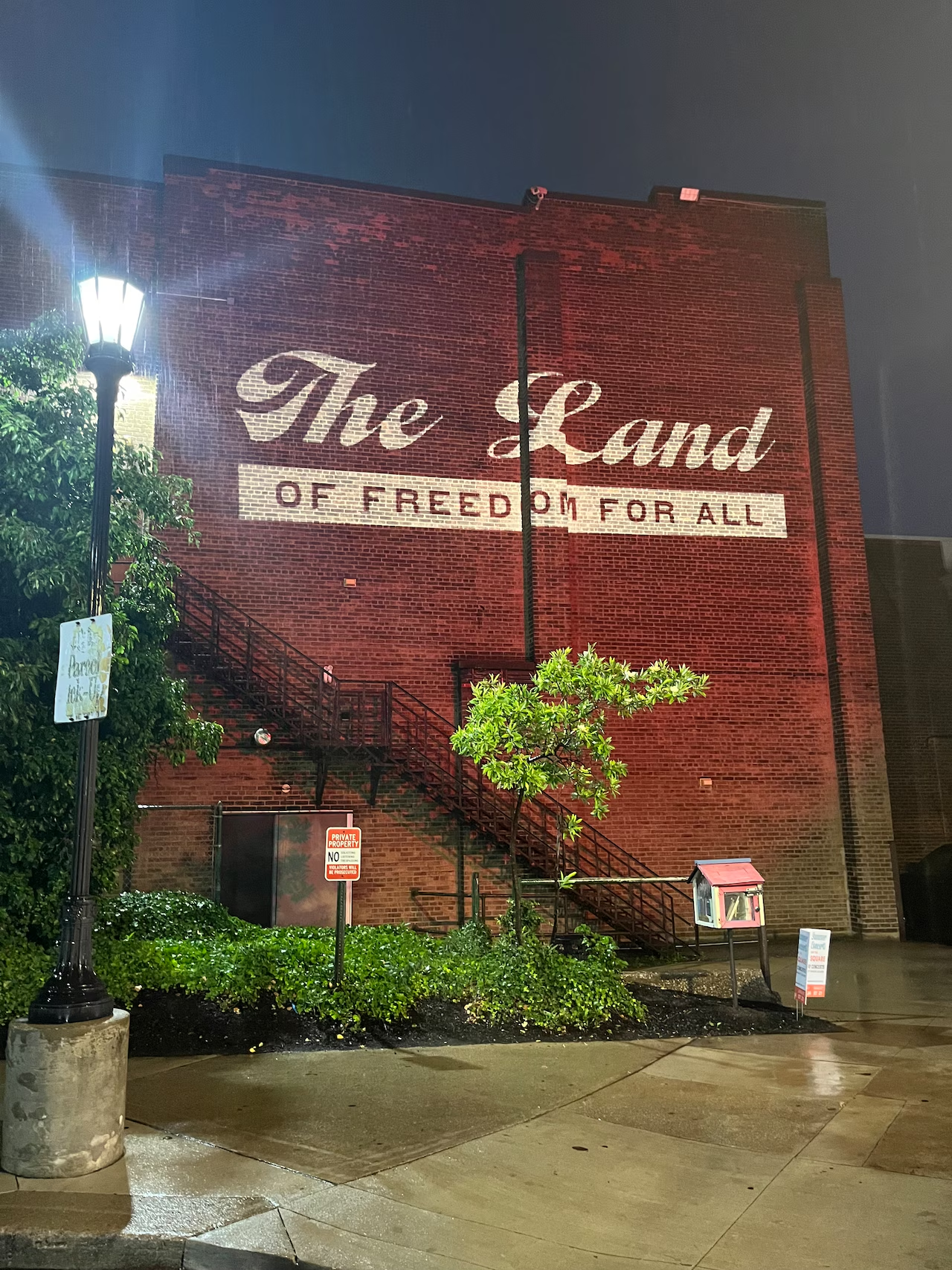
    Destination Cleveland is exporting its popular downtown lighting experience to the neighborhoods. First up is Shaker Square, on the city’s east side, which this weekend will debut a more modest version of Illuminate CLE, the nightly light show in Public Square that includes swirling, colorful shapes and images cast onto the Terminal Tower and other nearby buildings.

    Destination Cleveland worked with nonprofit Cleveland Neighborhood Progress to identify the first neighborhood expansion site. Read more on Cleveland.com.

  • Cleveland Neighborhood Progress wants to ramp up real estate expertise among CDCs

    Cleveland Neighborhood Progress wants to ramp up real estate expertise among CDCs

    Cleveland Neighborhood Progress (CNP) would like more of the city’s community development corporations to be involved in real estate and home repair. But the network currently lacks capacity, according to the organization’s most recent report.

    The report covering the second year of the nonprofit’s CDC Advancement and Resilience Initiative showed that only 48% of CDCs were at satisfactory capacity for real estate initiatives and 56% for home repair, much lower than CNP would like to see from its network. Read more from Crain’s Cleveland.

  • New report highlights critical role of Cleveland CDCs and investments needed to strengthen them

    New report highlights critical role of Cleveland CDCs and investments needed to strengthen them

    Cleveland’s neighborhoods are shaped by the work of community development corporations (CDCs)—organizations that bring together residents, businesses, and partners to drive local progress. CNP empowers these CDCs through its CDC Advancement & Resilience Initiative (ARI). 

    CNP’s most recent report on CDCs highlights how these organizations are evolving—and what they need to succeed. 

    Our ARI Report for Fiscal Year 2025 takes a deep look at the systems, people, and partnerships that power CDCs across the city. The findings are clear: strong neighborhoods depend on strong organizations. 

    What We Learned 

    Across Cleveland, CDCs are doing deeply complex work—revitalizing housing, supporting small businesses, building community trust, and coordinating essential services. But they are doing so in neighborhoods facing long-term disinvestment, population loss, and limited market activity. 

    The report identifies several key themes: 

    • Operational capacity matters. Investments in CDCs’ finance, HR, technology, and governance are essential to long-term impact. 
    • People power the work. Attracting and retaining talented staff is one of the sector’s biggest challenges—and greatest opportunities. 
    • Community engagement is a strength. CDCs excel at building trust and elevating resident voice, but this work is often under-resourced. 
    • Funding drives development outcomes. Neighborhood development—from housing to commercial corridors—depends on the availability of flexible capital, and when capital increases, outputs rise significantly. 
    • Partnerships multiply impact. CDCs coordinate networks of organizations to deliver services and investment at scale. 

    Investing in What Matters 

    In the second year of its new grantmaking program for CDCs, CNP invested nearly $1.9 million to strengthen Cleveland’s CDC network—focusing on operational systems, staffing, and long-term organizational health. 

    These investments are already making a difference: 

    • Growing capacity by helping retain 14 staff and add 6 new positions, 
    • Stronger financial and governance systems, 
    • Increased community engagement, and 
    • Greater alignment around long-term neighborhood planning. 

    Why It Matters 

    Neighborhood revitalization is long-term work. It requires trust, coordination, and sustained effort—often in the face of challenging market conditions. 

    This report underscores a critical insight: 
    If we want stronger neighborhoods, we must invest in the organizations that serve them. 

    Read the full report here.

  • Local developer launches Glenville apartment project with Village Capital

    Local developer launches Glenville apartment project with Village Capital

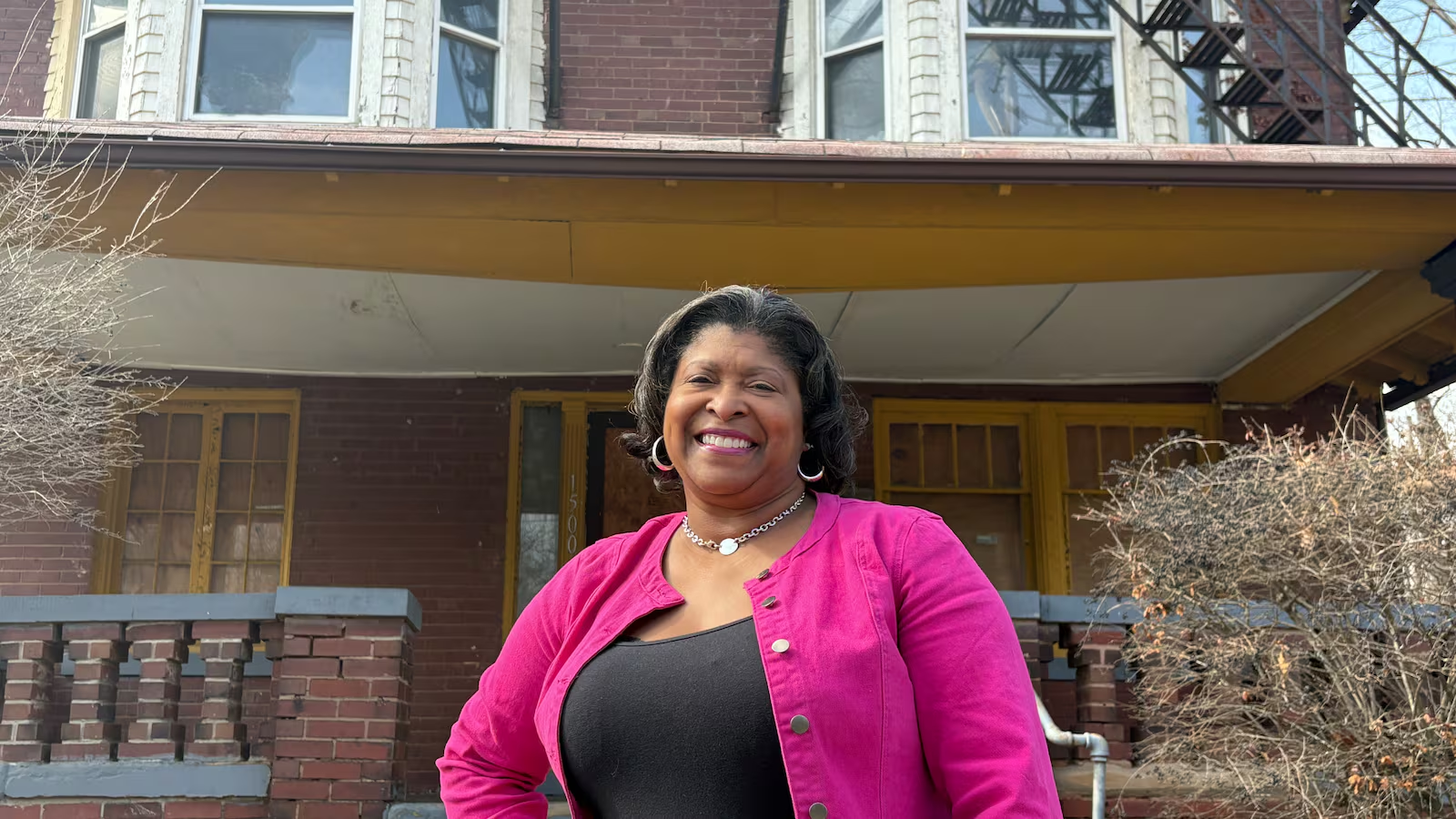
    A block from the Louis Stokes Cleveland VA Medical Center on East 105th Street sits a house that has been in disrepair for the better part of a decade. But now, a new developer is looking to transform the home into apartments, the inaugural project for her new firm.

    Named Project 1500, the home renovation is led by Tiffany Hollinger and her new Cleveland-area-based real estate firm, Astrea Development. The total development cost of Project 1500 is $750,000. The architect is Quadriga Studio, construction is by Yosemite Construction and the lender is Village Capital Corporation [CNP’s financial services arm]. Read more in the story by Crain’s.

  • Restaurant group bets on Shaker Square’s revival with its fourth spot

    Restaurant group bets on Shaker Square’s revival with its fourth spot

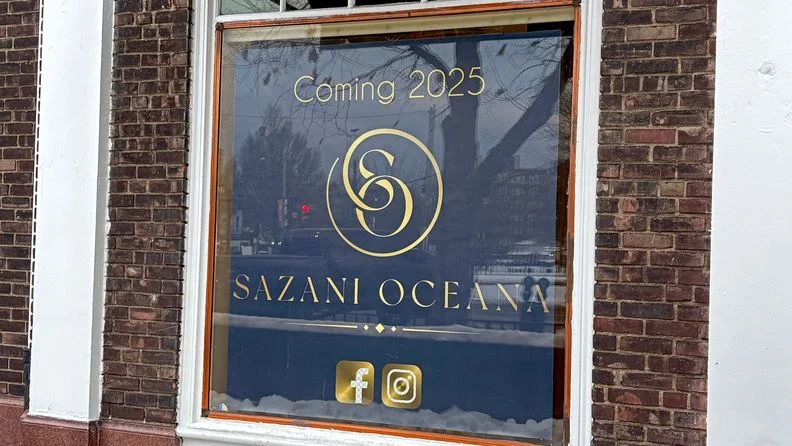
    Restaurant operator Akin Affrica’s newest concept, Sazani Oceana, aims to challenge expectations and demonstrate his dedication to revitalizing the nearly century-old Shaker Square.

    Sazani Oceana is taking over the former 4,600-square-foot Edwin’s Too space at 13220 Shaker Square. It follows Affrica’s other restaurant concepts — Zanzibar Soul Fusion, Cleveland Breakfast Club, and The Vegan Club, the latter of which operates within Cleveland Breakfast Club. Read the full story by Crain’s.

  • City, community groups try to stop auction of 14 buildings near Shaker Square

    City, community groups try to stop auction of 14 buildings near Shaker Square

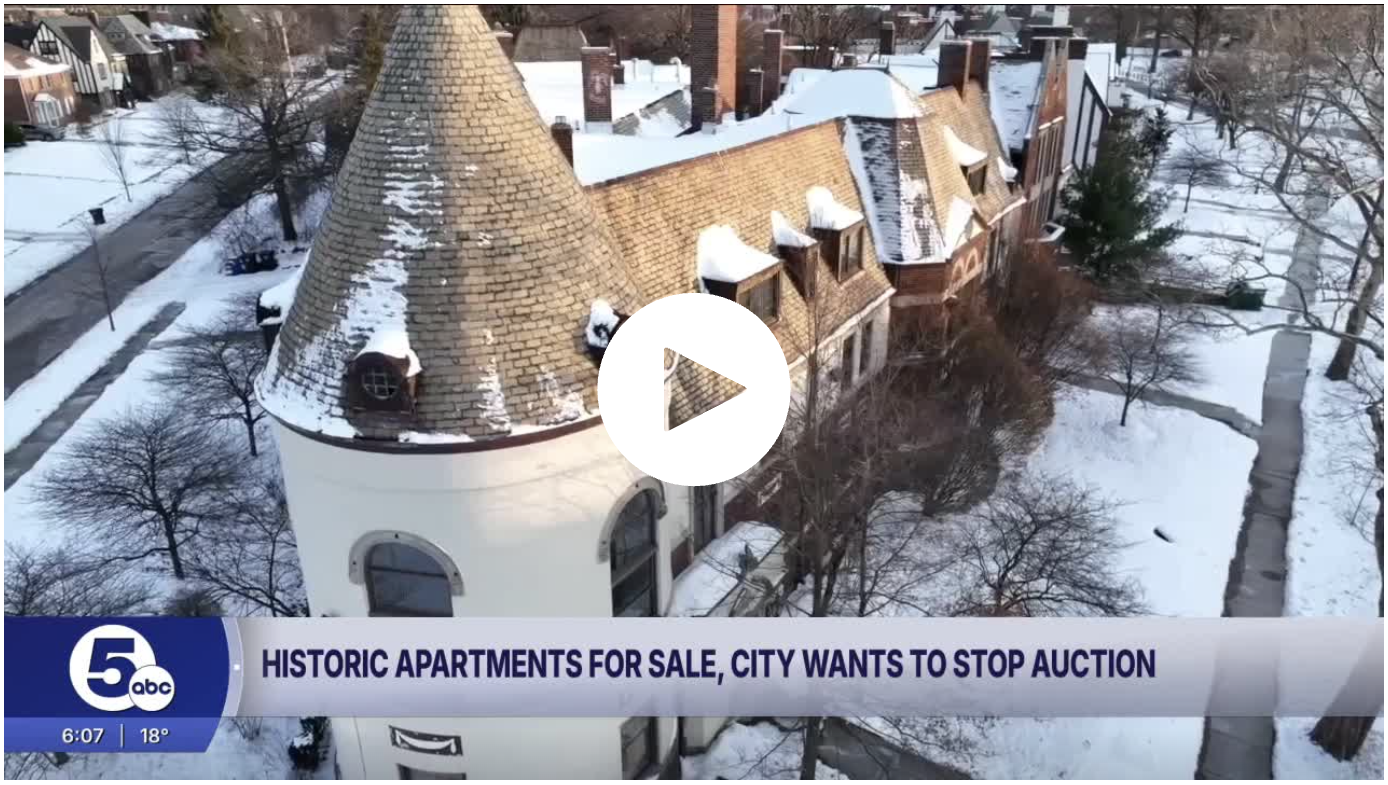
    The city of Cleveland is trying to stop an auction of 14 troubled apartment buildings near Shaker Square, in a historic district that’s a gateway to the eastern suburbs.

    Mayor Justin Bibb is urging Fannie Mae – a government-sponsored mortgage giant – not to sell a foreclosure judgment to the highest bidder next month. Instead, the city wants the properties transferred to local nonprofits or to a local developer that neighbors trust. Read more at News 5.

  • Nonprofit fighting against investors buying houses in low-income neighborhoods

    Nonprofit fighting against investors buying houses in low-income neighborhoods

    Anne Dalzell and her husband, John, decided more than 30 years ago to build a life together in Cleveland’s Collinwood neighborhood. For almost a decade, they’ve owned a home on a quiet street, about a one-mile walk from Lake Erie.

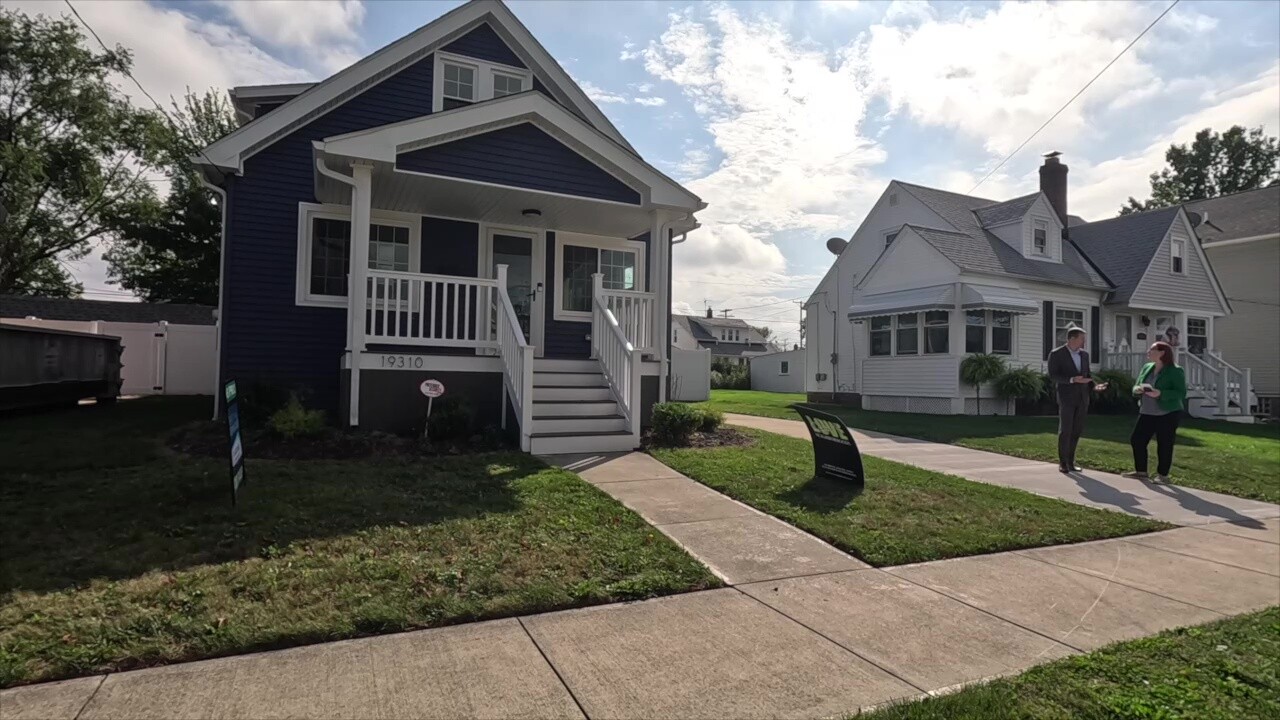
    They’ve watched the house next door change hands several times. Then the property went vacant. And a local nonprofit stepped in, buying the almost century-old house and renovating it as part of a bid to raise property values, boost homeownership and price investors out of the market.

    “It’s gonna be a multi-year approach,” said KC Petraitis, vice president of real estate for that nonprofit, Cleveland Neighborhood Progress. “And it should be, right?” Read more at News 5.

  • Ohio property tax working group meets with lawmakers

    Ohio property tax working group meets with lawmakers

    The Ohio property tax reform group set up by Gov. Mike DeWine is racing toward a Sept. 30 deadline.

    Franklin County Auditor Michael Stinziano and Edward Stockhausen from Cleveland Neighborhood Progress think abatements offer a familiar model that could be retooled to deliver targeted property tax relief.

    The idea, known as Residential Stability Zones, is laid out in Ohio Senate Bill 42.

    Eligible homeowners get a partial tax exemption equal to the increase in their home’s assessed value — essentially holding them harmless as their home value rises.

    The key, Stockhausen said, is determining who’s eligible. Read more at Ohio Capital Journal.