
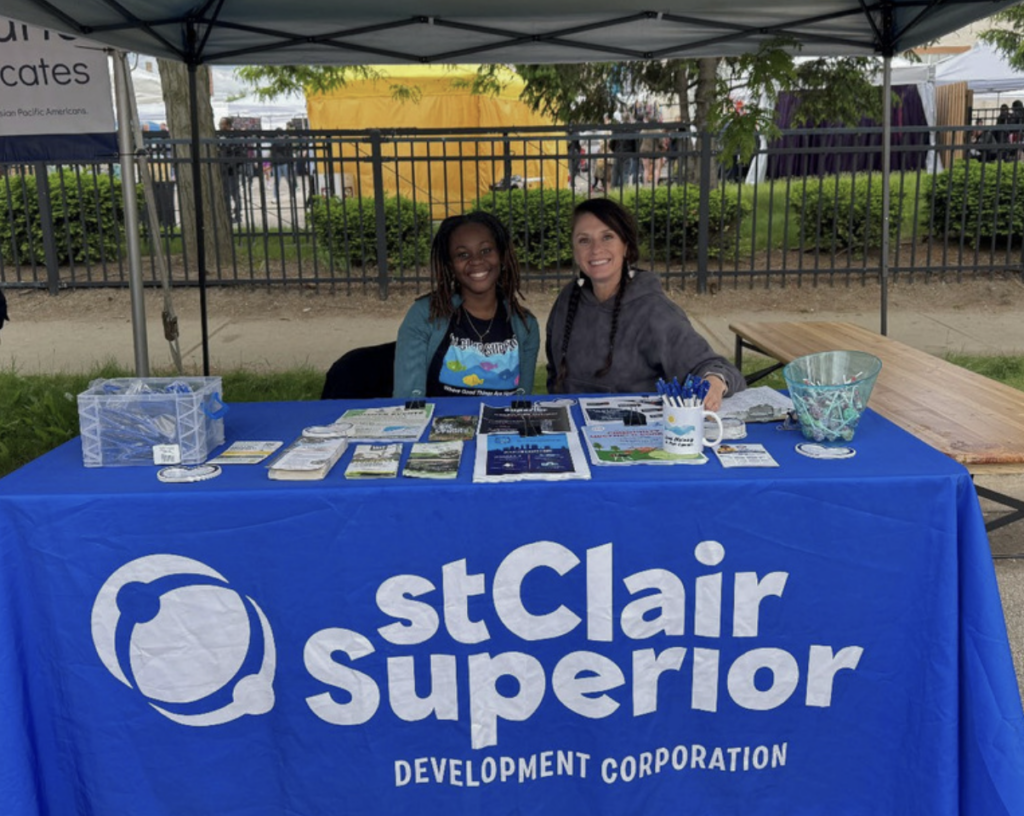
Cleveland’s neighborhoods are shaped by the work of community development corporations (CDCs)—organizations that bring together residents, businesses, and partners to drive local progress. CNP empowers these CDCs through its CDC Advancement & Resilience Initiative (ARI).
CNP’s most recent report on CDCs highlights how these organizations are evolving—and what they need to succeed.
Our ARI Report for Fiscal Year 2025 takes a deep look at the systems, people, and partnerships that power CDCs across the city. The findings are clear: strong neighborhoods depend on strong organizations.
What We Learned
Across Cleveland, CDCs are doing deeply complex work—revitalizing housing, supporting small businesses, building community trust, and coordinating essential services. But they are doing so in neighborhoods facing long-term disinvestment, population loss, and limited market activity.
The report identifies several key themes:
- Operational capacity matters. Investments in CDCs’ finance, HR, technology, and governance are essential to long-term impact.
- People power the work. Attracting and retaining talented staff is one of the sector’s biggest challenges—and greatest opportunities.
- Community engagement is a strength. CDCs excel at building trust and elevating resident voice, but this work is often under-resourced.
- Funding drives development outcomes. Neighborhood development—from housing to commercial corridors—depends on the availability of flexible capital, and when capital increases, outputs rise significantly.
- Partnerships multiply impact. CDCs coordinate networks of organizations to deliver services and investment at scale.
Investing in What Matters
In the second year of its new grantmaking program for CDCs, CNP invested nearly $1.9 million to strengthen Cleveland’s CDC network—focusing on operational systems, staffing, and long-term organizational health.
These investments are already making a difference:
- Growing capacity by helping retain 14 staff and add 6 new positions,
- Stronger financial and governance systems,
- Increased community engagement, and
- Greater alignment around long-term neighborhood planning.
Why It Matters
Neighborhood revitalization is long-term work. It requires trust, coordination, and sustained effort—often in the face of challenging market conditions.
This report underscores a critical insight:
If we want stronger neighborhoods, we must invest in the organizations that serve them.
Read the full report here.